.svg)
.svg)
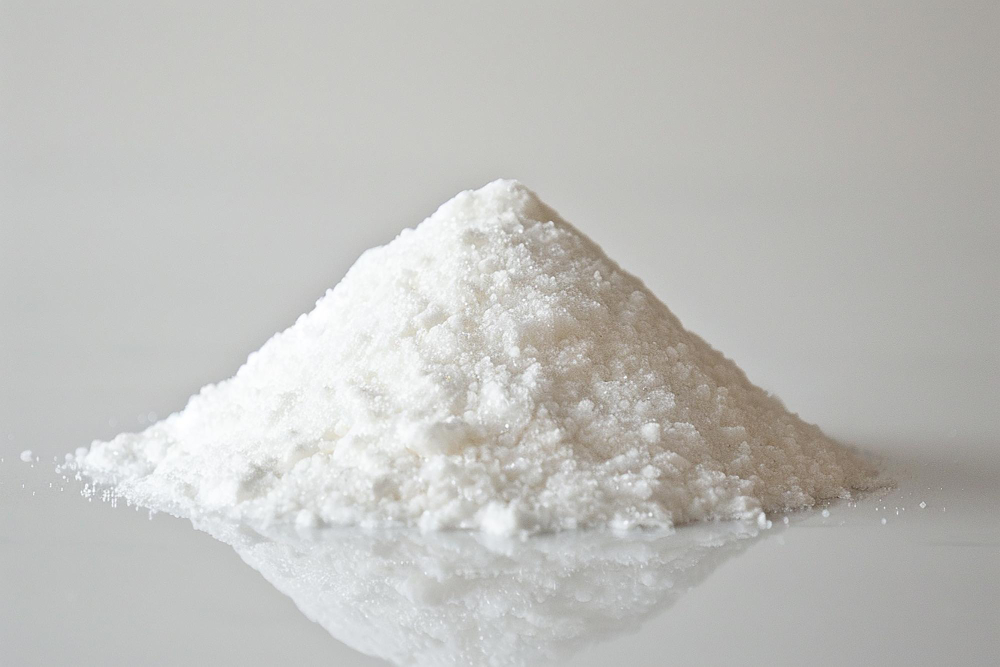
L-Citrulline Malate
L-Citrulline Malate is a compound that combines the amino acid L-citrulline with malic acid, a natural component of the Krebs cycle involved in energy production. L-citrulline is a precursor to L-arginine, which the body uses to increase nitric oxide levels. This rise in nitric oxide promotes vasodilation, improving blood flow, oxygen delivery, and nutrient transport to muscles during exercise. The addition of malate may further support energy production and reduce exercise-related fatigue.
For athletes, L-Citrulline Malate is valued for its effects on endurance, strength, and recovery. Research shows it can increase training volume, enhance high-intensity performance, and reduce post-exercise muscle soreness. By improving circulation and metabolic efficiency, it supports both aerobic and anaerobic exercise demands, making it a versatile supplement for a wide range of sports.
Unlike stimulants, L-Citrulline Malate works through physiological pathways that support long-term performance improvements rather than providing a short-lived energy spike. Its ability to enhance muscle pumps, delay fatigue, and accelerate recovery has made it a staple in pre-workout supplements and endurance stacks. When used consistently, it can help athletes train harder, recover faster, and adapt more effectively to their training regimens.
L-Citrulline Malate improves both aerobic and anaerobic performance by enhancing circulation, reducing fatigue, and supporting energy production. This dual action makes it especially useful for athletes engaged in high-volume training or endurance competition.
- Boosts blood flow through nitric oxide production
- Improves exercise endurance by delaying fatigue
- Reduces muscle soreness after intense training
- Supports recovery speed between workouts
- Enhances training volume for strength and hypertrophy
Commonly included in pre-workout supplements and endurance formulas to support blood flow, delay fatigue, and reduce soreness after exercise.
- Pérez-Guisado, J., & Jakeman, P. M. “Citrulline Malate Enhances Athletic Anaerobic Performance and Relieves Muscle Soreness.” Journal of Strength and Conditioning Research, vol. 24, no. 5, 2010, pp. 1215–1222. doi:10.1519/JSC.0b013e3181cb28e0.
- Cunniffe, B., et al. “Acute Citrulline-Malate Supplementation and High-Intensity Cycling Performance.” Journal of Strength and Conditioning Research, vol. 30, no. 9, 2016, pp. 2638–2647. doi:10.1519/JSC.0000000000001340.
- Trexler, E. T., et al. “Citrulline Malate and Endurance Performance: A Systematic Review.” Nutrients, vol. 12, no. 6, 2020, p. 1642. doi:10.3390/nu12061642.
- Bendahan, D., et al. “Citrulline/Malate Promotes Aerobic Energy Production in Human Exercising Muscle.” British Journal of Sports Medicine, vol. 36, no. 4, 2002, pp. 282–289. doi:10.1136/bjsm.36.4.282.
- Glenn, J. M., et al. “Acute Effects of L-Citrulline Supplementation on High-Intensity Strength and Power Performance: A Systematic Review and Meta-Analysis.” Sports Medicine, vol. 47, no. 4, 2017, pp. 631–640. doi:10.1007/s40279-016-0604-7.